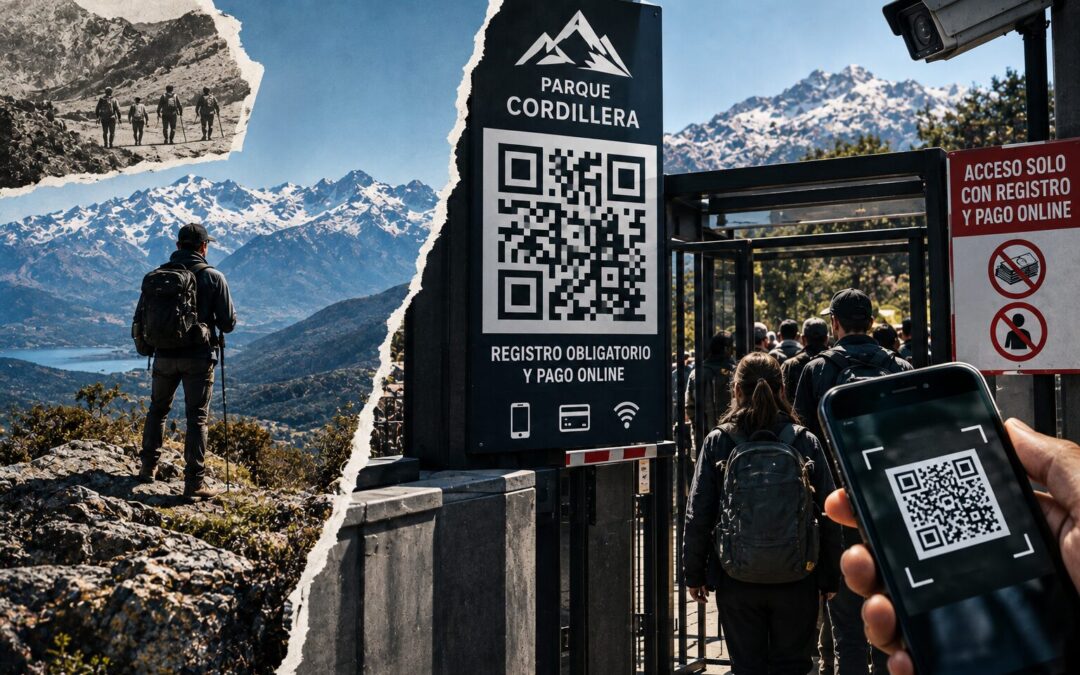
In Chile, more and more people are being required to pay to access natural spaces that, for generations, were places of free passage and connection with nature. Access to parks and mountains has been increasingly privatized, while digital payments, private platforms, mandatory registration, and QR codes are beginning to become part of the experience of accessing these places.
The access model implemented and administered by the Asociación de Parques Cordillera, which brings together seven municipalities and manages more than ten parks, has established new barriers to entering these natural spaces. Internet access, a bank card, and digital registration are now requirements for access, and cash payment is no longer an option.
Private Access and Digital Restrictions on Going to the Mountains
A large part of the mountainous territory is classified as state-owned property and, legally, belongs to the State. But state-owned property is not private property of the State: it is an asset that the State administers in the public interest, while national public-use assets — such as streets, roads, beaches, rivers, and lakes — are intended for use by all inhabitants. Territory that belongs to the State cannot, in practice, end up functioning as though it were exclusively accessible to those who can pay or accept private conditions. There must be roads, corridors, or easements connecting these spaces to public roads, because when they do not exist, access becomes dependent on private land and may turn into paid access. Thus, the mountain belongs to everyone, but without guaranteed access routes, its status as a common heritage loses meaning for those who cannot reach it.
A second barrier is added to this territorial one: the digital barrier. For example, to enter parks managed by Parques Cordillera, visitors must first register and pay through TUR, Copec's private platform. Hikers must connect to the internet, register, provide personal information, and pay digitally using bank cards. What should be a free outing to the mountains becomes an online experience, conditioned by access to banking services, internet connectivity, and digital systems. Those who cannot or do not wish to pay digitally — older adults, people without a bank account, or those seeking disconnection or privacy from digital tracking — are excluded from access to the mountains. Instead of guaranteeing inclusive access through appropriate public measures, responsibility is shifted onto individuals: if they cannot adapt to the digital system, then it is supposedly “not safe” for them to enter. The solution ceases to be improving management and instead becomes filtering entry through technological barriers.
In 2025, Parque Mahuida, administered by the Municipality of La Reina, announced that admission payments would be exclusively online or by bank card. In response to this measure, architect Jorge Adedo Rovirosa held meetings with the Presidential Delegation, the Servicio Nacional del Consumidor (SERNAC), the Chilean public agency responsible for protecting consumer rights, and lawyers' organizations, and prepared possible legal actions. In 2026, before those actions moved forward, the park reversed the measure and resumed accepting cash payments. A few kilometers away, Parque Padre Hurtado, a large enclosed urban park, also charges admission and has repeatedly been used for private events, shifting its public role toward commercial purposes. The board of mayors that administers it even proposed allocating a section to turn it into a private water park. These are not isolated cases, but rather part of a trend toward transforming public-use spaces into businesses, while the State, instead of guaranteeing their public character and inclusive access, establishes barriers that ultimately force citizens themselves to organize and demand that these rights be respected.
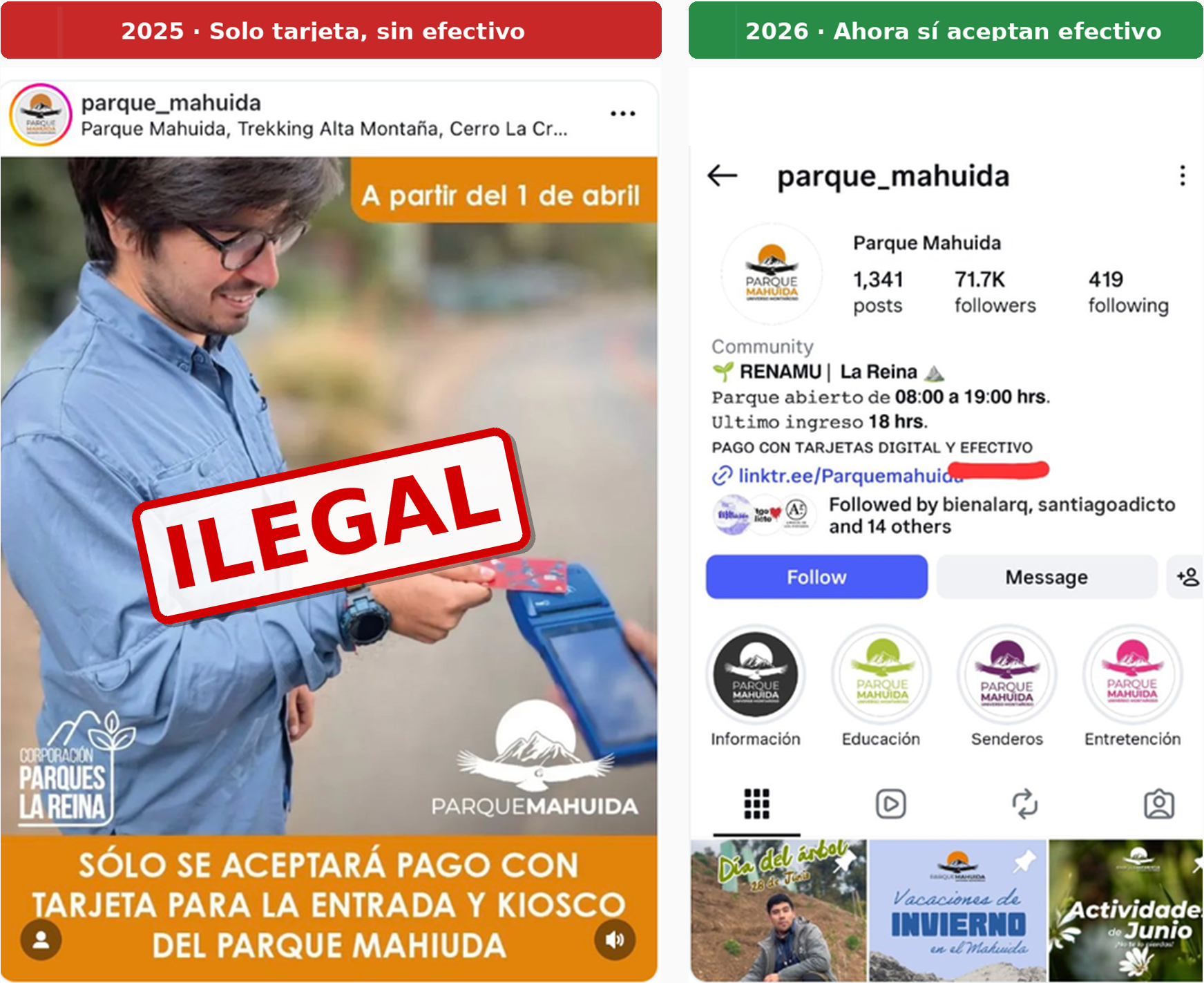
Publicaciones de Instagram de @parque_mahuida
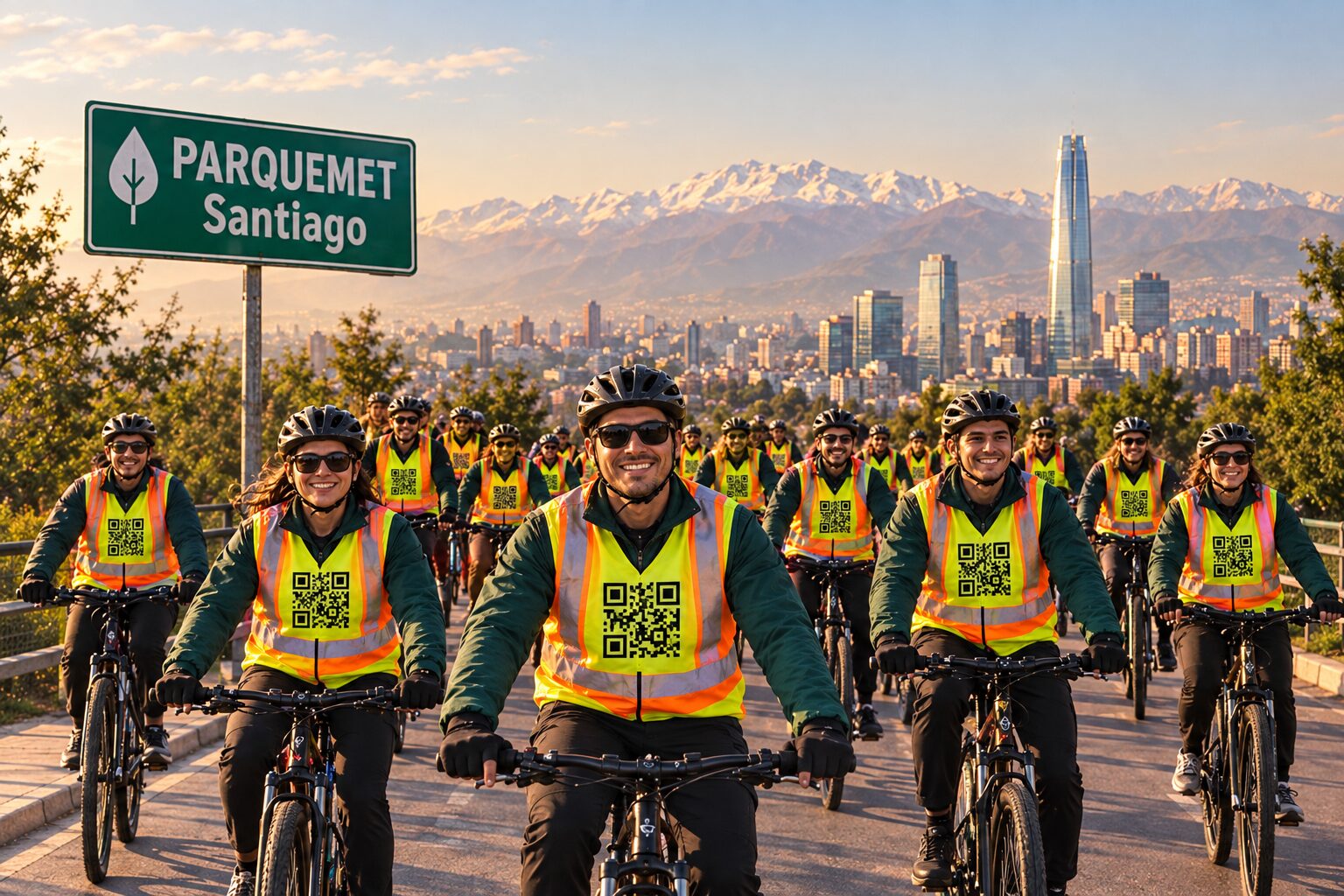
Digital control, however, is not limited to payment. At Parquemet, the Santiago Metropolitan Park, the Ministry of Housing and Urban Development announced that, starting in December, those wishing to enter will have to register using ClaveÚnica, the Chilean State's digital identification system, and wear a reflective vest with a QR code. The measure was presented as a response to risks associated with cyclists traveling at high speeds. Instead of addressing the problem through specific safety and management measures, such as adequate signage, speed control, and enforcement, the measure imposed is a new form of identification and control over visitors.
Even the institutional discourse is contradictory. Those who manage these parks claim to “promote connection with nature,” but in practice they restrict spontaneous and inclusive access. Behind the friendly slogans are contracts, private platforms, rising fees, access conditioned by digital means, and business interests. The logic is clear: access to the mountain is restricted and replaced by a transaction mediated through banking systems and digital control. But the payment is not made only with money: personal information is also provided, feeding private and government databases and expanding the business model toward data collection and user control. The mountain and parks cease to be common goods and become an “event,” while those who visit them become registered and traceable customers.
Violated Rights and Municipal Complicity
This is not merely an injustice: there are legal principles that limit these practices. The Chilean Constitution guarantees the right to equal treatment, and there are regulations governing access to and use of public assets.
The Consumer Protection Law also supports this principle. The Servicio Nacional del Consumidor (SERNAC) has established that both public entities and concessionaires of public-use assets are required to accept cash payments. In addition, Article 31 of the Organic Law of the Central Bank of Chile expressly establishes that consumers have the right to pay in cash. Refusing to do so not only restricts access, but disproportionately affects older people, children, those excluded from the digital or banking system, and also those who choose, out of conviction or for privacy reasons, not to use these means. This practice is not only socially unjust, unethical, and discriminatory, but also violates constitutional guarantees and fundamental rights such as equality before the law and free access to public goods. Furthermore, purchasing an entrance ticket to several of these parks requires providing an excessive amount of personal data, much of which has no evident relationship to the purchase or use of the ticket. The collection of this data must serve a specific purpose, be necessary and proportionate to the service provided, and comply with Chilean legislation on the protection and processing of personal data.
Imposing exclusively digital mechanisms for something as basic as access to a park may conflict with accessible and inclusive public administration.
Without Public Corridors, Access to Nature Becomes Privatized
There are also current legal provisions that guarantee the existence of free-access corridors to natural environments. However, while access to beaches and lakes has greater recognition and visibility, corridors to rivers, hills, and other natural areas are frequently ignored or simply nonexistent. When there is no designated public corridor, reaching a river, hill, or other natural space may depend on crossing private property, accepting conditions imposed by its administrators, and, in many cases, paying to do so.
The problem takes on a greater dimension when those who administer these access points also have a financial incentive associated with charging admission fees. In parks managed through private concessions or whose revenues directly benefit municipalities, guaranteeing free public access may come into conflict with the financing model. Under this logic, every visitor who uses a public corridor without paying represents revenue that is not collected.
Thus, the absence of public corridors is not merely an administrative issue. It can become a structural barrier: the natural space remains for public use, but the route to reach it becomes subject to private conditions. Nature may be public, but effective access to it remains in private hands. In this scenario, the discussion is no longer merely about how much it costs to enter a park. The fundamental issue is who controls access, who benefits from the lack of alternatives, and why, for years, public and private interests have been allowed to determine who can reach the mountains, by which route, and under what conditions.
A Digital Control Model
Chile is quietly becoming a laboratory for digital control presented as modernization. While the debate should focus on the right to choose how and when to interact with digital technology, here technology is being imposed as a mandatory condition for accessing basic rights such as nature.
The paradox is evident: sustainability and inclusivity are promoted in public discourse, while the exclusion of those who cannot or do not wish to depend on digital and payment systems to access public spaces continues to advance. The less sovereign and less informed a community is, the more easily forced digitization is accepted. The administration operates under an exclusionary logic, transforming the public sphere into a business model. Common goods are channeled through private tools and monetized by platforms that are accountable to no community. Nature, which should be a shared right, is now mediated by systems that turn access into a transaction and the experience into a consumer product.
The Mountain Belongs to Everyone
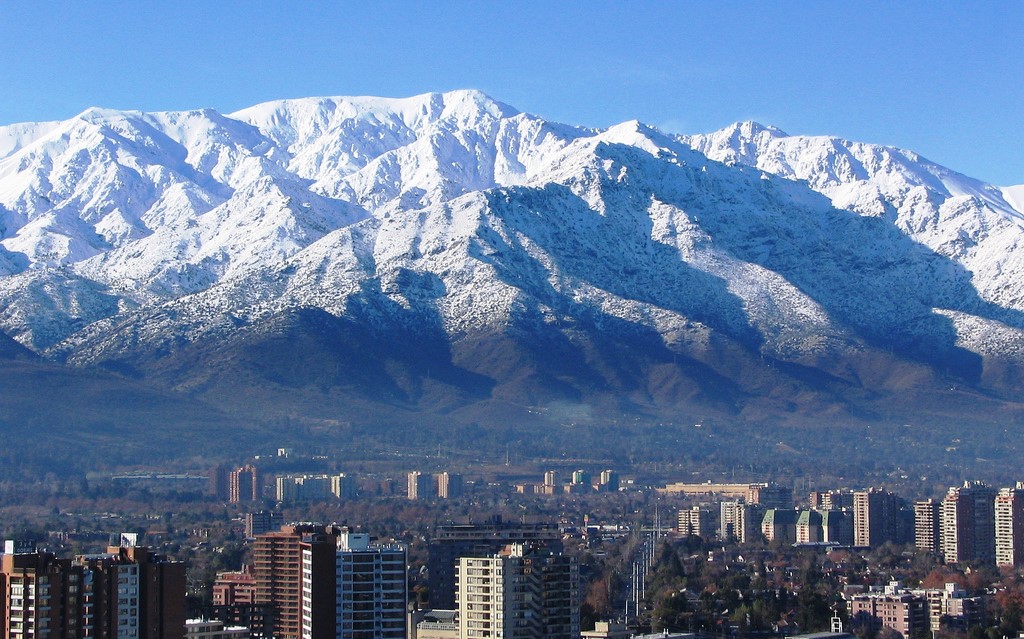
The Andes mountain range does not belong to corporations or private ticketing platforms. It is part of our common natural heritage, and access to it should not depend on payments, digital wallets, or technological barriers. As long as there is no legal accountability, transparent public management, and truly inclusive access conditions, we are not dealing with a park system; we are facing privatization in disguise.
Nature was not created to be exclusive. It does not recognize social classes, ask for credentials, or measure the connectivity of those who walk through it. The mountain does not require a bank card or an online form to let you walk its trails. Its greatness lies precisely in the opposite: it is free, open, and belongs to everyone.
Turning that access into a digital transaction not only restricts a right, but also breaks the ancestral bond between people and their environment. And those who are called upon to protect these spaces, such as park rangers and public institutions, should not act as agents of digital control, but as defenders of the common good. Nature must not become a privilege. The more barriers that are erected between people and the land they inhabit, the farther we move from truly public access to nature.