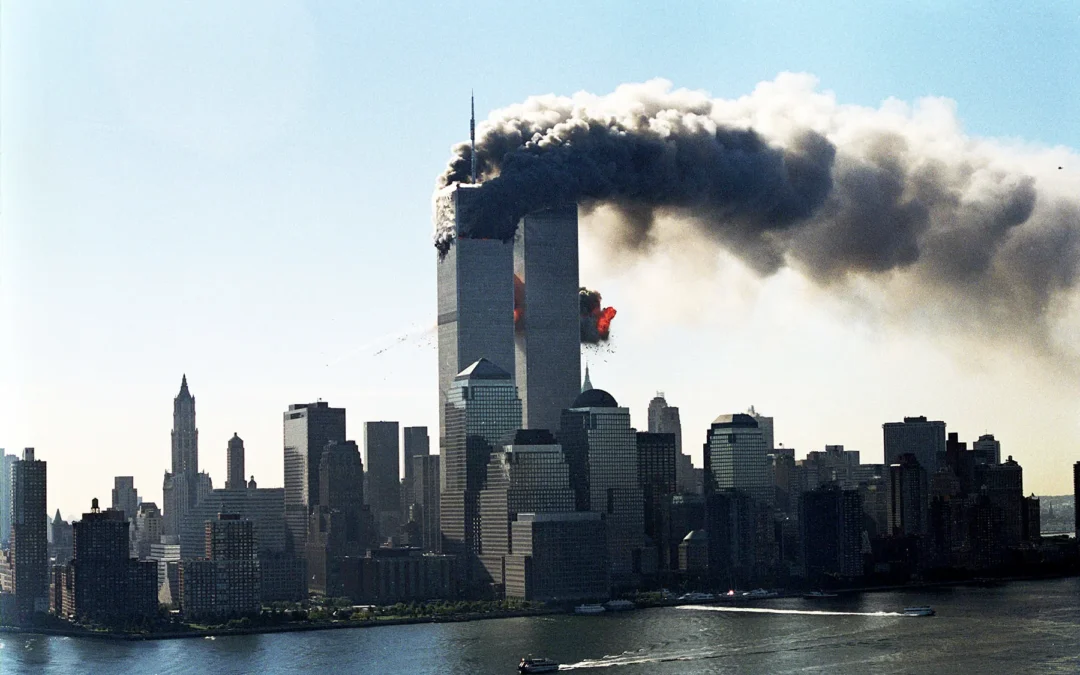
“9/11 is the biggest lie of our lifetime.” The words were spoken by Christopher Gioia, a New York fire commissioner and 9/11 first responder, who has argued that World Trade Center 7 collapsed from the bottom up because of hidden explosives.
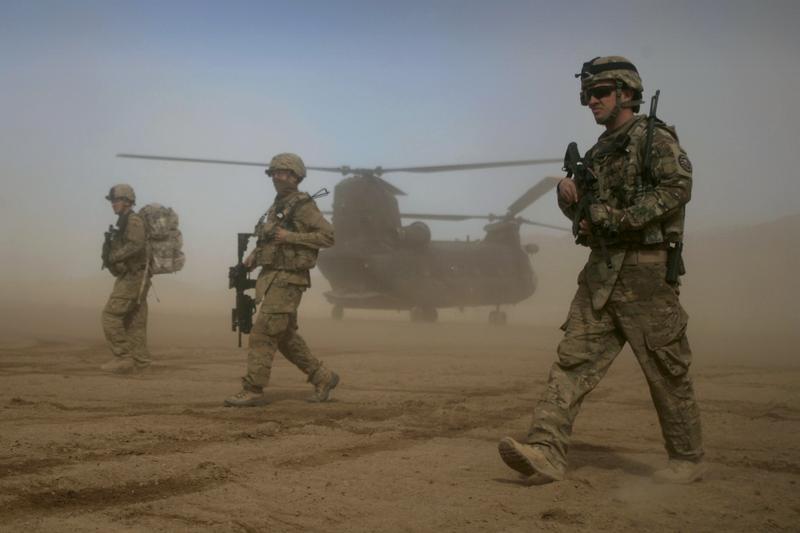
Whatever one believes about the cause of the collapse, 9/11 became the defining pretext for the “war on terror”: first Afghanistan, then Iraq, followed by a permanent expansion of military, intelligence and security infrastructure across the Middle East and beyond. The official narrative placed al-Qaeda and Osama bin Laden at the center of the attacks. Bin Laden, once supported and trained by CIA and U.S.-backed networks during the Cold War against the Soviet Union, was transformed into the face of a new global enemy. In 2001, he reappeared on the scene, giving speeches in rags from a cave, portrayed as the personification of the enemy to be fought and as the person “responsible” for the attacks on the WTC on September 11 in New York City. Questions have also been raised over what intelligence agencies knew before the attacks and whether foreign intelligence services, including the CIA and Mossad, had a deeper involvement. But history is also measured by consequences. The post-9/11 world brought enormous growth in military spending, weapons production, surveillance, border controls and private security, while reinforcing Western strategic influence over a region rich in oil and other natural resources. Measures once difficult to imagine became politically possible in the name of security—and, in many cases, were demanded by frightened populations themselves.
But the questions do not end with the geopolitical consequences. How much of the physical evidence, the intelligence failures and the unexplained details have actually been examined, and how much have we simply learned to accept? Consider George W. Bush, then president of the United States, sitting in a Florida classroom as the attacks unfolded. A member of Yale’s Skull and Bones society, Bush was surrounded by cameras as he sat among the children during a reading exercise. As the nation was being plunged into chaos, the students were instructed to repeat words such as “hit,” “steel”, “plane,” “must” aloud. Moments later, his aide leaned over and whispered to him that a second plane had struck the World Trade Center. The sequence has since become one of the most symbolic moments of that morning: a president sitting calmly among children while they repeated words that, when viewed in hindsight, seem eerily connected to the unfolding catastrophe. Was it merely an innocent coincidence, or some type of ritual, perhaps connected to the secret societies Bush belonged to?
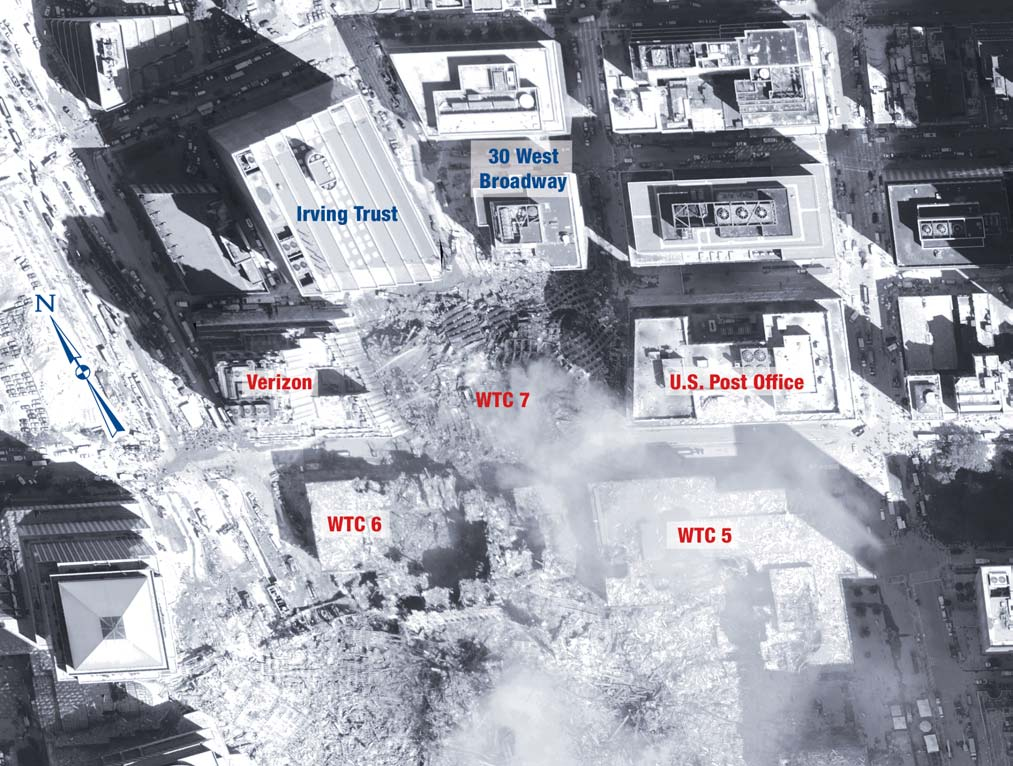
And what about World Trade Center 7? A 47-story building that was not struck by an aircraft collapsed later that afternoon in a remarkably symmetrical-looking descent. To many observers, the footage resembles a controlled demolition. NIST concluded that fires caused structural failures that initiated a progressive collapse and reported finding no evidence of explosives. Yet the visual appearance of the collapse has continued to generate questions. And the two Twin Towers themselves also collapsed in a manner that, to many viewers, appears strikingly similar to controlled demolition: both towers suffered catastrophic structural failure and descended rapidly downward, with enormous clouds of dust and debris spreading outward. How could aircraft impacts, fires and the resulting structural failures produce such a similar pattern across three massive steel-framed skyscrapers? Is it really enough to attribute the entire sequence to a combination of aircraft impacts, fire and a cascading “domino effect”? The similarities represent not just one anomaly, but a series of extraordinary coincidences that seem difficult to reconcile with what they would expect from buildings of this type. From this perspective, the possibility that the buildings had been equipped with pre-planted explosives or an internal demolition mechanism appears more plausible than the explanation of a simple fire-induced collapse.
The Pentagon presents another enduring point of controversy. American Airlines Flight 77 did crash into the Pentagon, and the official investigation documented aircraft debris and human remains. Nevertheless, claims that the crash left “no traces” continue to circulate, largely because of the limited public release of early Pentagon security-camera footage and the unusual appearance of some photographs from the scene. The more useful question may therefore be not whether an aircraft struck the Pentagon, but how completely the available physical and visual evidence was made accessible to the public.
Then there is the story of the allegedly hijacker's passport, belonging to Satam al-Suqami, which was reportedly recovered by a passerby before the collapse of the towers and eventually handed over to the police. Critics have long questioned how a fragile paper document could survive an event that destroyed so much else. But the official account is more specific than the claim that a passport survived because it was ejected from the plane at the moment of initial impact, falling to the street before the intense fire and the collapse. It is, however, impossible to verify.
Another controversial episode involves the five Israeli nationals detained in New Jersey after witnesses reported seeing them filming and appearing to celebrate the attacks. It became known as the “dancing Israelis.” They were investigated, detained, and ultimately deported to Israel. At least two of them were reportedly connected to Mossad, raising questions about whether they knew about the attacks in advance. What is documented is the detention and investigation itself, and that alone is enough to warrant asking what investigators discovered, what intelligence agencies knew, and why the men were ultimately released and deported.
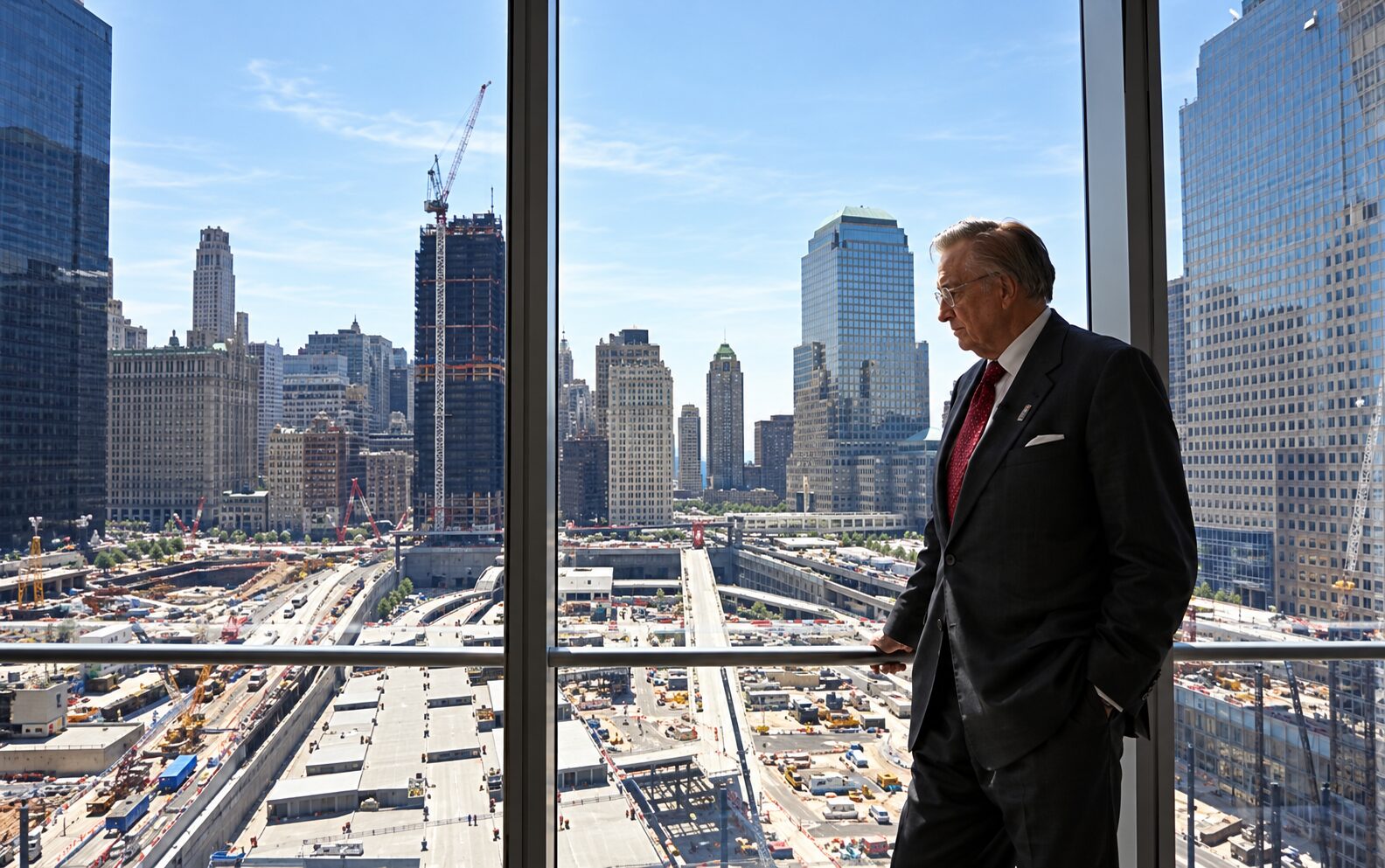
The attack on the World Trade Center also led to a convenient reset of the international financial network through the destruction of the “unbacked” financial archives of Wall Street located in the WTC. Another cited detail concerns Larry Silverstein, who leased the complex only months before 9/11 and had terrorism insurance. After the attacks, he successfully argued that the two aircraft strikes constituted two separate insured events, ultimately receiving a settlement of approximately $4.55 billion. Silverstein later recalled that he did not go to the World Trade Center that morning because he had a doctor’s appointment—the only day he missed work.
How much of the 9/11 story have we truly examined, and how much have we simply learned to accept? Twenty-five years later, perhaps the most uncomfortable legacy of September 11 is not only what happened that morning, but what the world became afterward—and what remains in plain sight.