Written by
Jorge Adedo Rovirosa
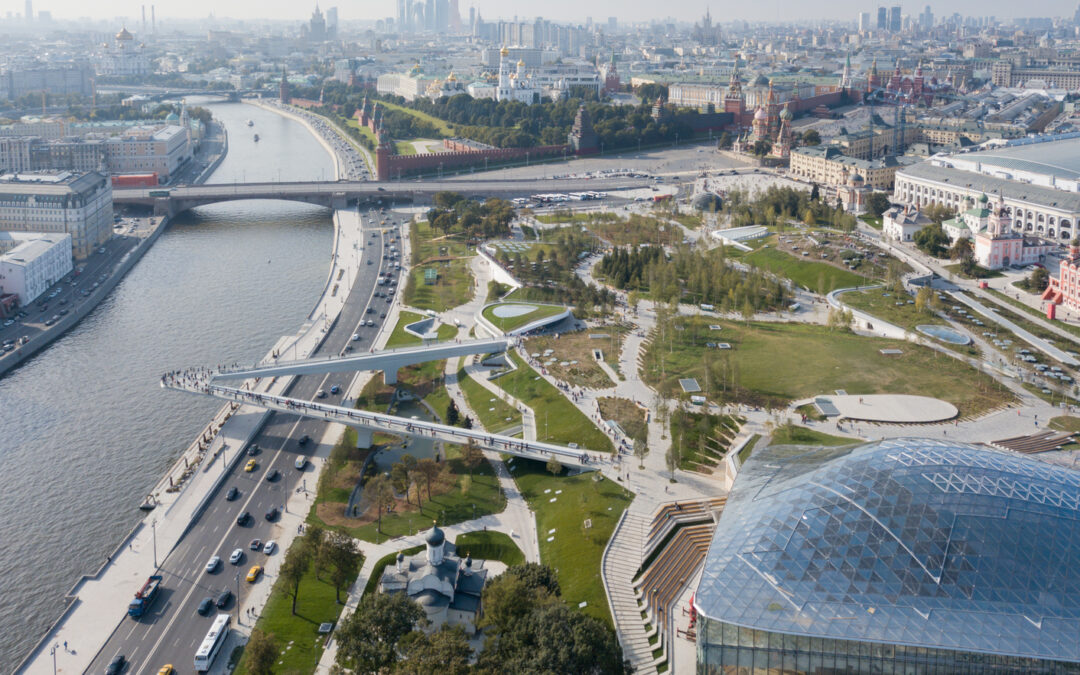
Adjacent to Red Square and extending the public space toward the southeast, lies Zaryadye Park. Opened in 2017 in the heart of Moscow, the project transformed one of the most historically layered and politically symbolic sites in Russia into a new urban landscape focused on public life, culture, and environmental experience. The park first caught my attention long before I arrived in Moscow, when I came across photographs of it in an online architecture magazine. I vividly imagined myself walking through its landscapes, and years later, when I finally visited, it fully lived up to those expectations.
The park was built on the site of the historic Zaryadye neighborhood, dating back to the 12th and 13th centuries and later becoming one of Moscow’s main Jewish districts during the 19th century. During the Soviet era, plans for Zaryadye proposed demolishing much of the neighborhood to make way for successive monumental projects, including an administrative complex and later a Stalinist skyscraper, although these schemes were never realized. The only major project ultimately completed was the massive Rossiya Hotel, which itself was later demolished beginning in 2006.
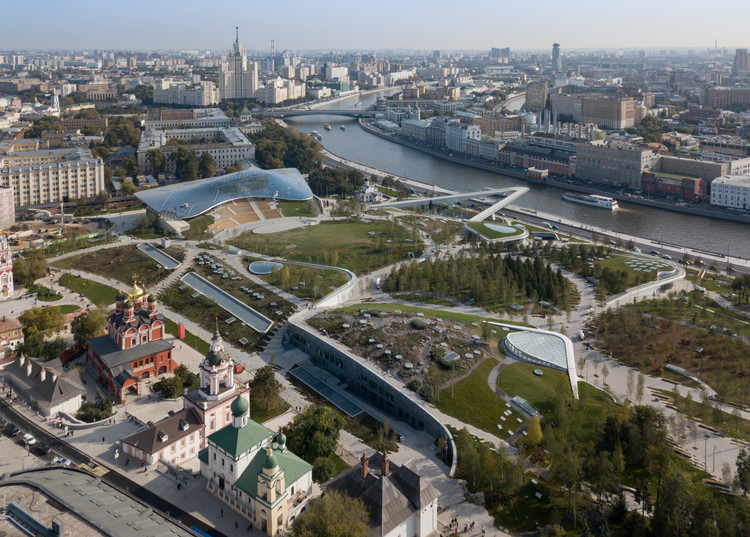
The creation of Zaryadye Park represented a significant shift in urban priorities. Instead of replacing the site with another commercial or monumental megastructure, the Russian government ultimately chose to create a large public park integrated with the historic center of the city. Earlier proposals included hotel expansion and commercial development projects involving architect Norman Foster, who worked on concepts that expanded the commercial use of the site as a shopping and entertainment complex. The final decision, however, emphasized public space, landscape, tourism, and civic identity—a long-term urban vision focused on quality of life and public value rather than purely commercial development.
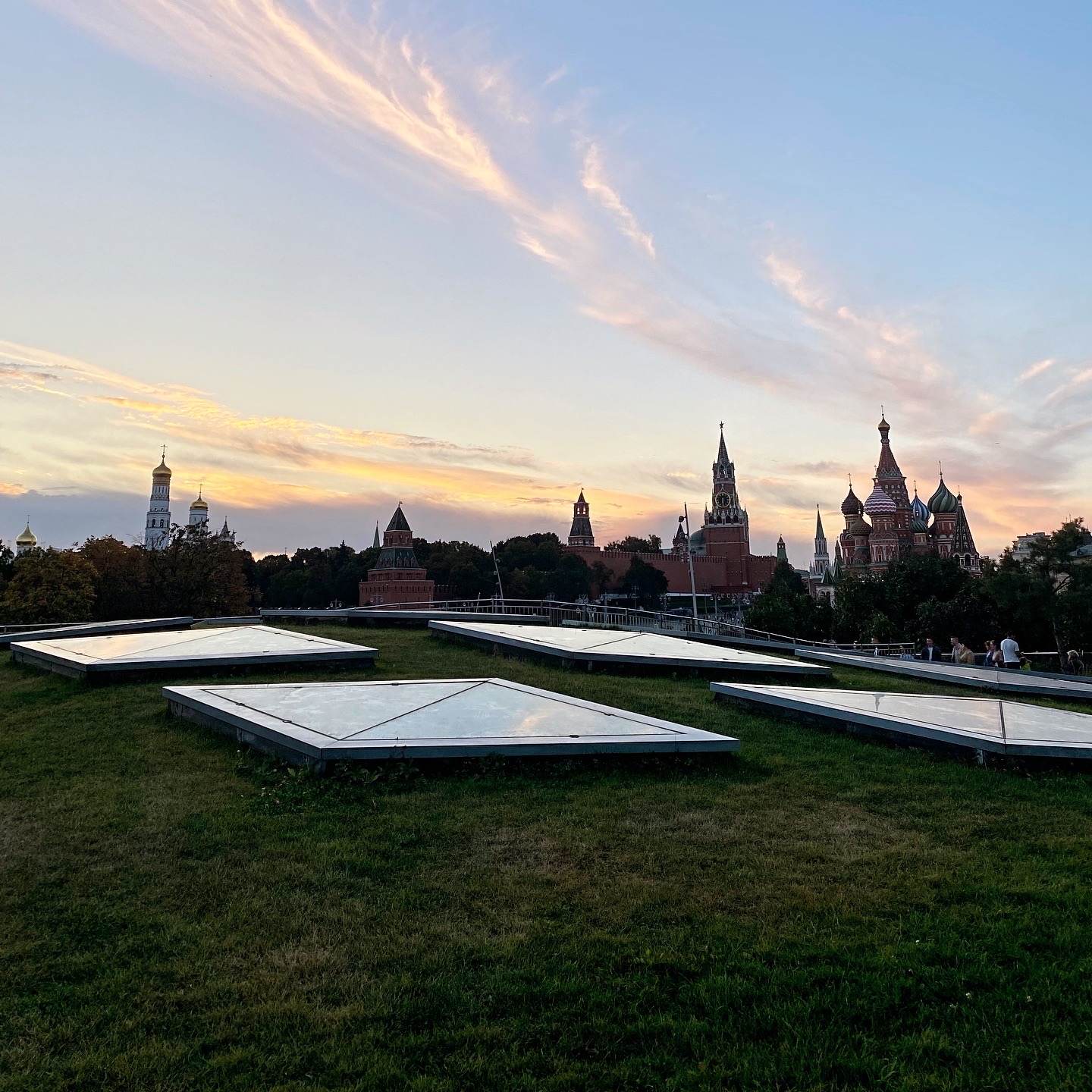
Designed through an international competition, the project was led by the New York-based architecture studio Diller Scofidio + Renfro together with Hargreaves Associates, Citymakers, and a multidisciplinary international team. The design proposed an urban landscape that merges architecture, ecology, infrastructure, and topography into a continuous public environment.
Rather than reproducing the formal symmetry of traditional monumental parks, Zaryadye introduces an artificial yet immersive landscape inspired by Russia’s diverse climatic regions. Forests, tundra vegetation, wetlands, and open meadows are carefully integrated into a layered topography that rises and descends across the site. Architecture is partially embedded into the terrain, allowing buildings and landscape to coexist rather than compete.
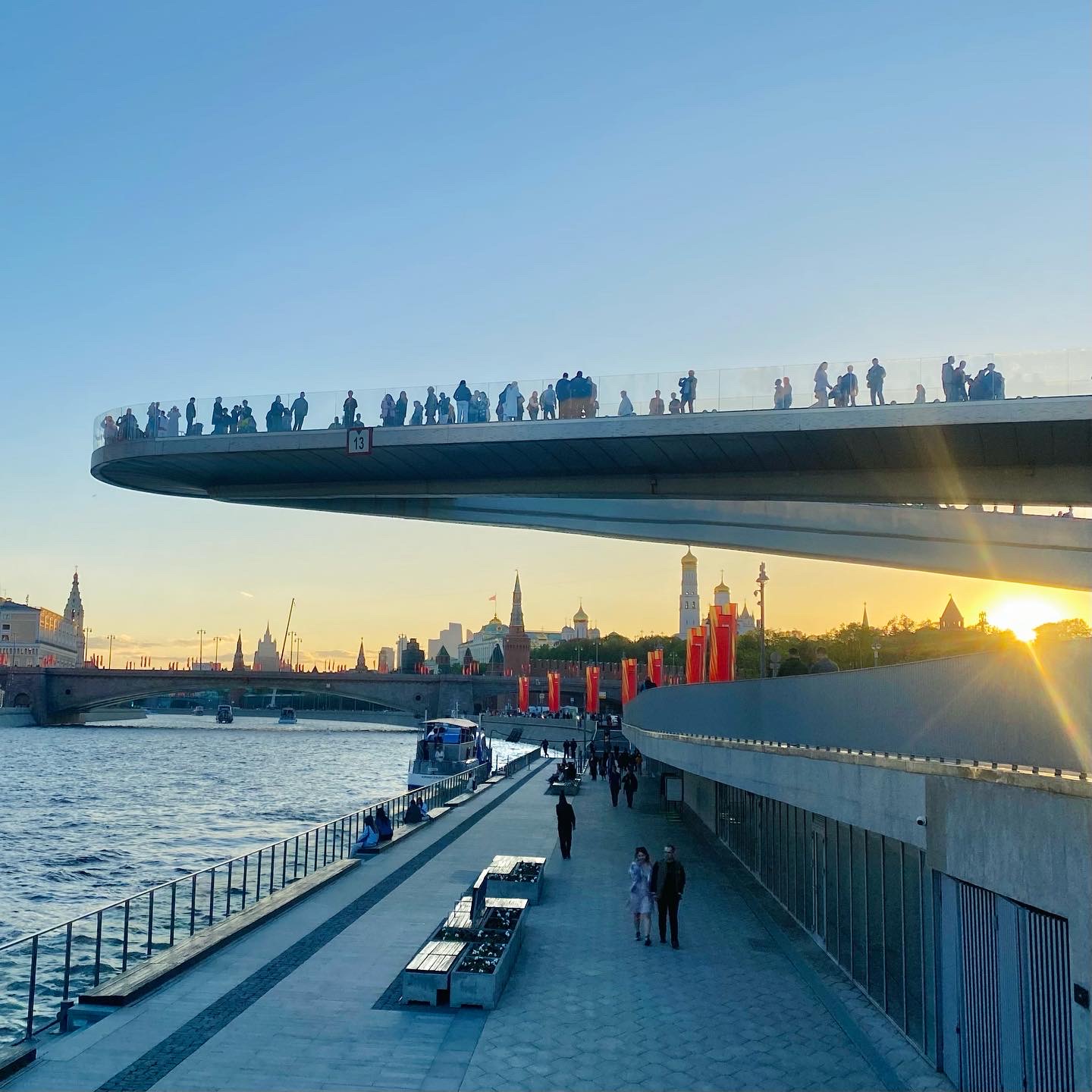
One of the park’s most recognizable elements is the Floating Bridge, a dramatic cantilevered observation platform that extends over the Moskva River without fully crossing it. The structure creates a unique viewing experience toward the Kremlin, the river, and the city skyline, becoming both an architectural landmark and a social gathering space. The park itself feels like a window into Moscow, combining vast green spaces, avant-garde landscaping, and carefully choreographed views across the historic center.
Equally significant is the Concert Hall complex, largely concealed beneath an artificial hill and topped by the open-air Great Amphitheater. This integration of cultural infrastructure into the landscape reflects the park’s broader architectural strategy: buildings emerge from the terrain rather than stand as isolated objects.
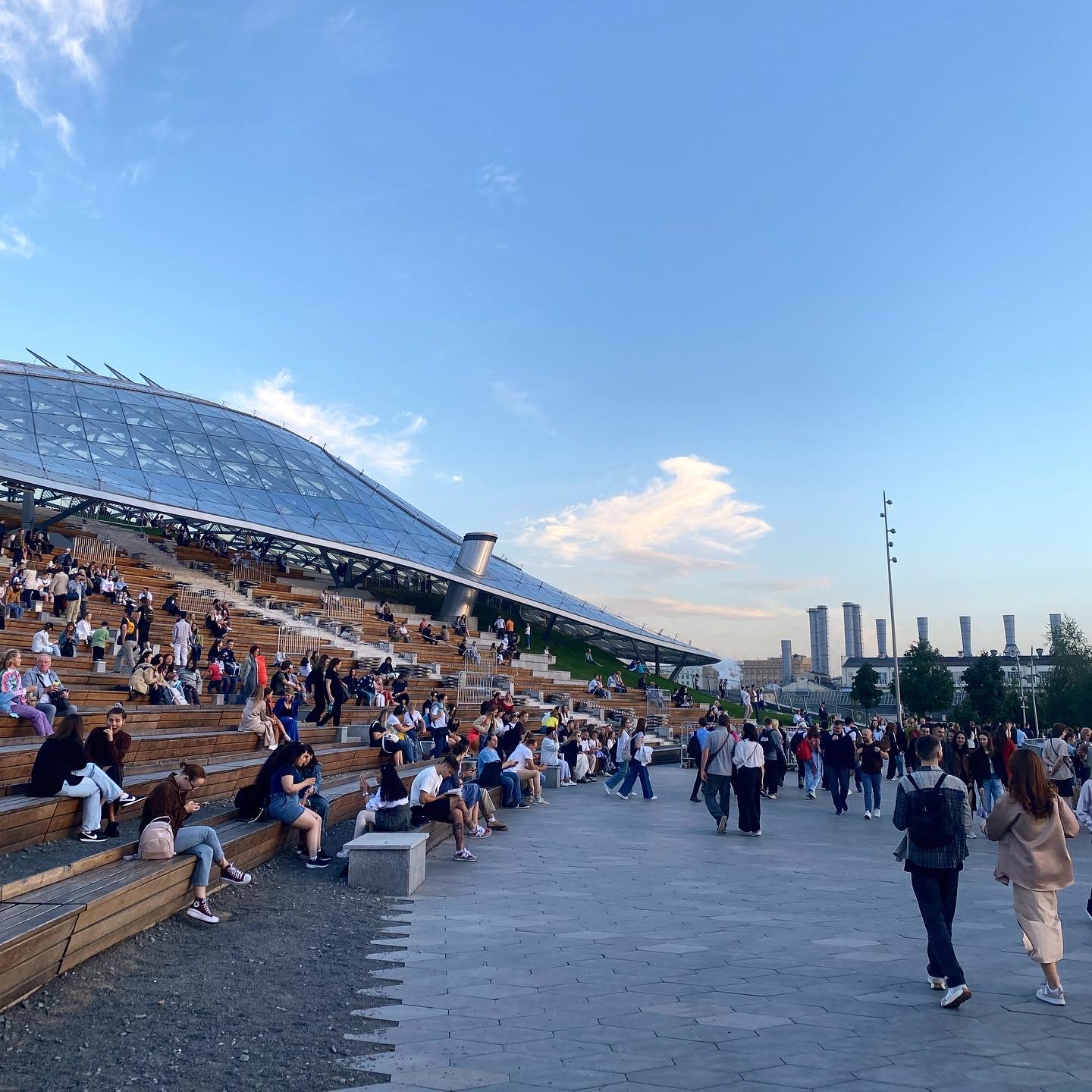
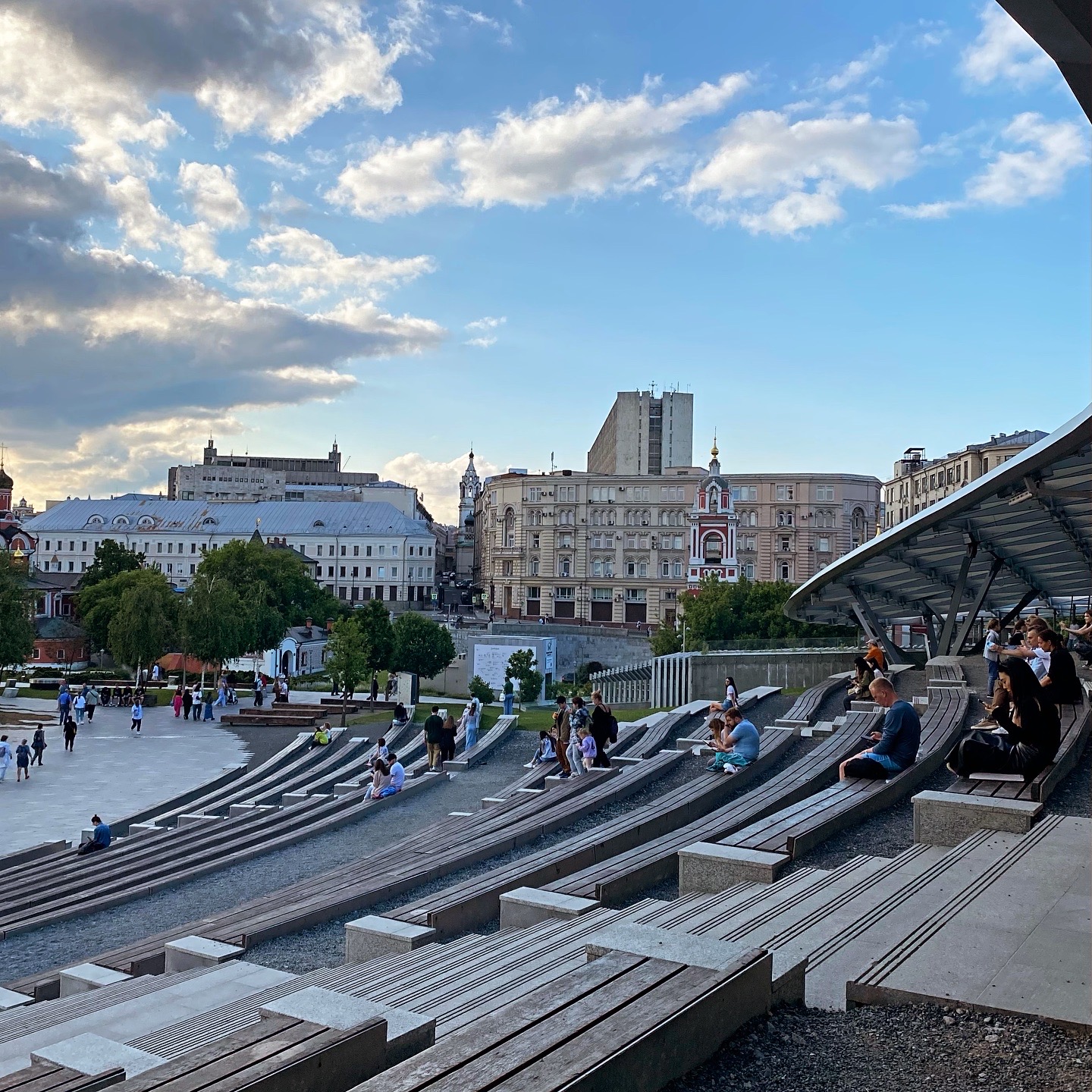
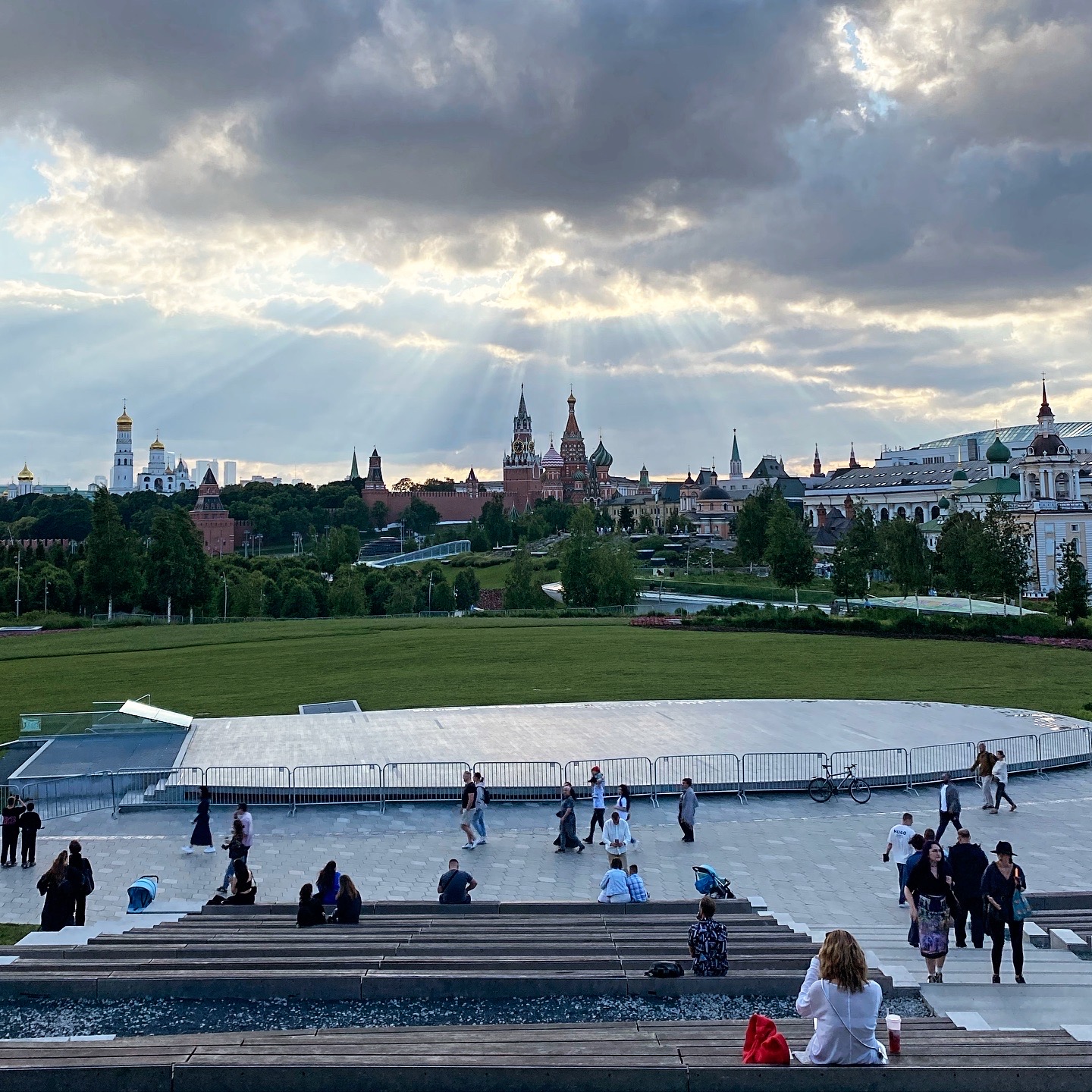
The park also incorporates advanced environmental technologies. A large glass canopy creates a controlled microclimate over parts of the landscape, helping extend outdoor use during Moscow’s colder seasons. Sustainable systems for temperature control, vegetation management, and environmental performance contribute to the project’s identity as both urban infrastructure and public landscape.
Beyond its architecture, Zaryadye Park represents a broader cultural transformation in Moscow. The site evolved from a medieval district into a Jewish commercial neighborhood, later into a territory of Soviet demolition and monumental ambition, and finally into a contemporary civic landscape. Few urban spaces encapsulate so many layers of political, social, and architectural history within a single site.
Experiencing the park throughout different seasons reveals its constantly changing atmosphere. In winter, snow softens the landscape into a quiet white terrain overlooking the historic center.
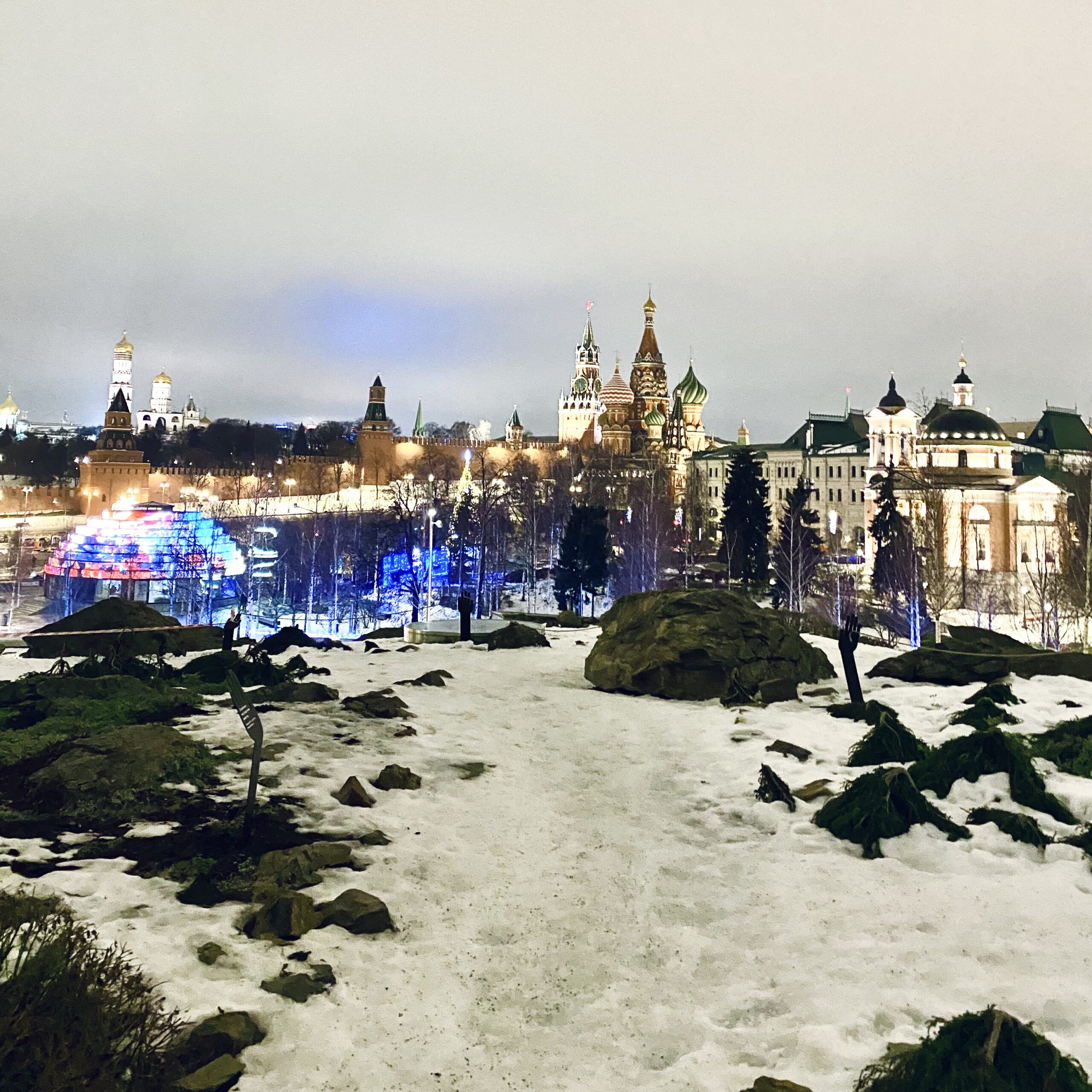
During summer, the park becomes vibrant and active, filled with visitors walking across gardens and elevated pathways. At sunset, reddish reflections spread across the Moskva River and the glass surfaces of the structures, while nighttime transforms the park into a calmer and more contemplative urban environment marked by an almost cinematic stillness.
Zaryadye Park demonstrates how contemporary architecture and landscape design can reclaim historically contested urban land and redefine it through public space. Rather than imposing another isolated monument on the city, the project reconnects Moscow with a fragment of its layered history while offering a new civic experience for residents and visitors alike.