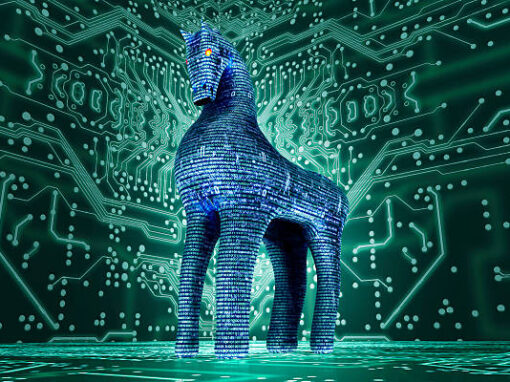
“A beautiful sculpture is delivered to a castle, and once inside, it becomes an attack” was a strategy used by the Achaeans to gain entry into the fortified city of Troy. The philosophical concept and metaphor behind this story have been used as a military or political strategy many times throughout history, and it is also occurring in contemporary society.
When we first hear the story of the Trojan Horse, we think about how innocent those were who allowed that sculpture to enter the castle. Yet today, there is also innocence regarding new Trojan horses that are invading our society, in an even more evident manner.
An innocent society welcomes enemies because it does not understand the dangers and is persuaded by illusions of development and progress. The consequences of technology are often unknown, unconnected, or unanalyzed amid the admiration for innovation and the interests represented by this industry. Decades ago, the philosopher Martin Heidegger had already said that technology was something people did not control, and that they were consumed by the pursuit of novelty presented through it. As part of an invasion of humanity, technology is being used as a contemporary Trojan Horse toward a system of control and surveillance, transforming people and society on a global scale.
Twenty-first-century society is built upon digital technologies, and these technologies, in turn, are built upon electricity. A large portion of work is carried out using computers, while communication, education, entertainment, and human interaction also occur, to a certain extent, through digital means. Our society is so dependent on digital technologies and electricity that, if these systems were to shut down, no one would know what to do. The technological machinery, its complex processes, and its relationship with different areas of society create a dependency hanging by a thread: that computer systems function, that we have internet access, or simply that we have electricity.
A small variation in solar waves, a cosmic effect, or an intervention by a human or non-human group could easily leave Earth without these technologies for days, years, or centuries.

Through the internet, states and governments, corporations, intelligence agencies, and secret services can gain access to virtually all the information used by individuals. The internet is, to a large extent, a military instrument, as are its associated systems and devices. The operating systems of companies such as Microsoft, Apple, Huawei, and others, as well as programs, websites, and applications, contain subsystems that allow access to the information stored on each device.
The services or social networks of companies such as Meta, X (Twitter), Google, WeChat, and others are “free” for users, yet at the same time they are highly valued in the marketplace because they trade user information, sell it to companies and organizations, and share it with governments and intelligence services.
The Threat of Digital Control
Computers and all types of internet-connected devices, from smartphones, tablets, watches, and virtual assistants such as Amazon’s “Alexa,” to integrated systems and smart technologies in cars, buses, and other means of transportation, as well as in homes, buildings, and cities, are used as tools for surveillance and the mass collection of data.
Through these devices, not only can direct control be exercised by blocking systems whenever deemed convenient or by accelerating their literally programmed obsolescence remotely—a very common practice among major technology companies to sell new products—but control can also be exercised through data. By using data, it becomes possible to influence people psychologically, inducing them to desire certain products, support certain trends, receive government messages in the event of “an emergency,” and ultimately, to influence behavior.