In the summer of 2026, Albania witnessed one of its largest protest movements against the sale of Albania's strategic land to foreign investors for project development, as well as against the corruption and political power that allow it. The movement became known as the “Flamingo Revolution,” after the pink flamingo adopted by protesters as a symbol of the threatened wetlands around the Vjosa–Narta protected area.
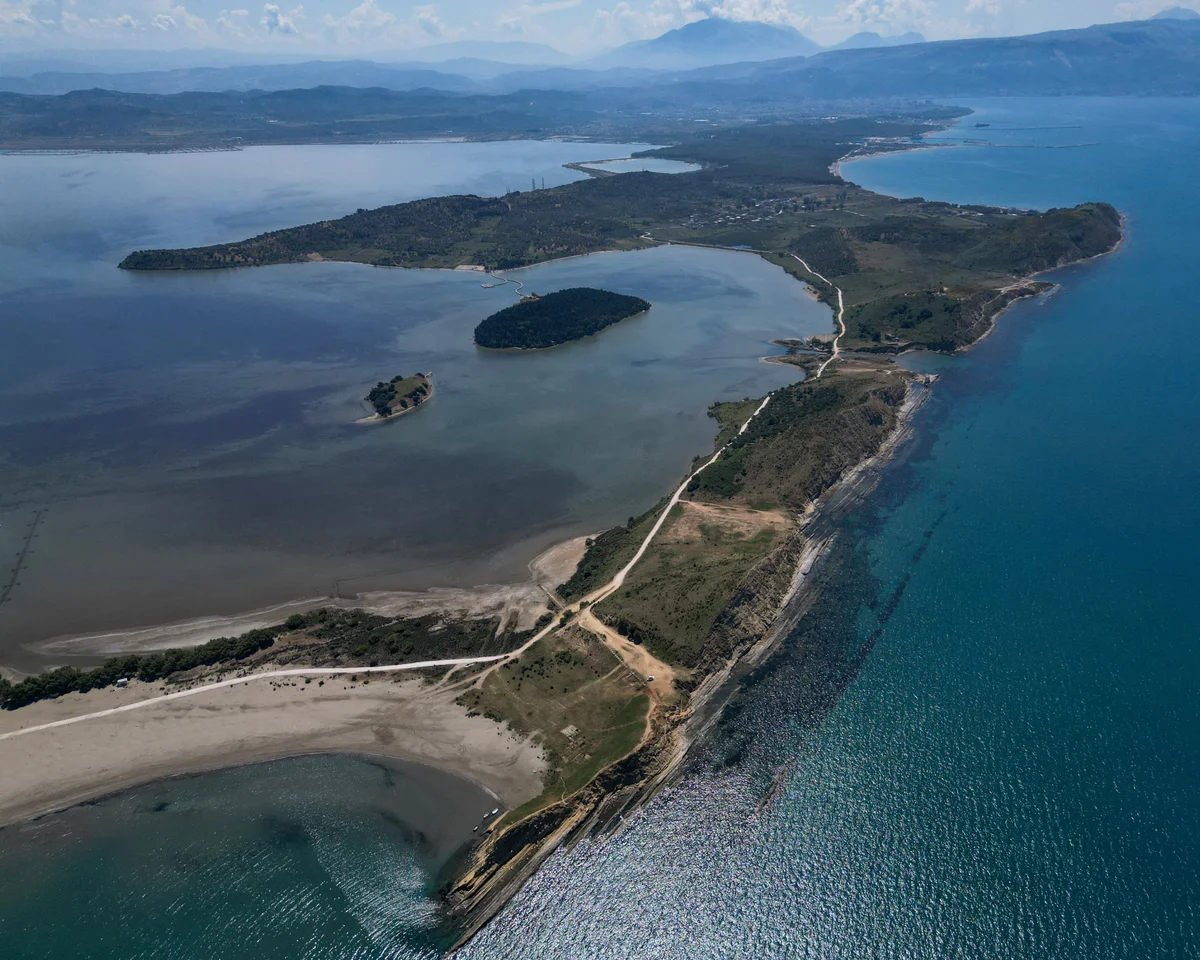
A vast area of land involving Sazan Island and the Zvërnec–Pishë Poro coastline has been acquired by Jared Kushner, Zionist frontmen, former White House adviser and son-in-law of President Donald Trump, and his wife, Ivanka Trump. Kushner is also the same figure who has been involved in plans for a new Gaza, following the destruction caused by the invasion of Israel.
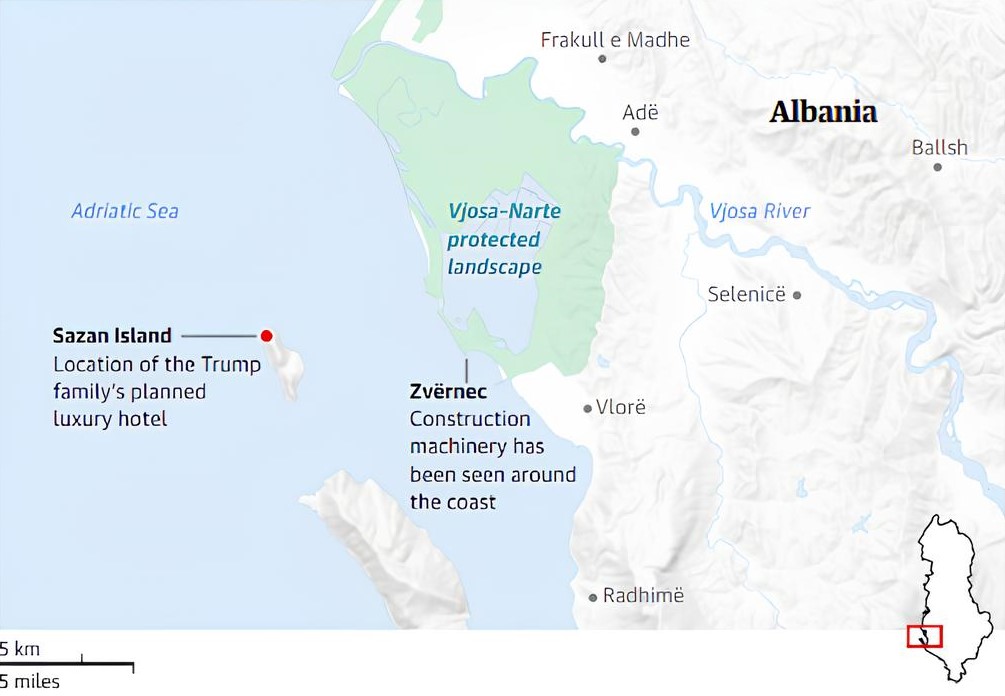
The plans include luxury hotels, villas and apartments, a golf course, casino, water park and yacht facilities. They are presented as a sustainable development project that will protect the surrounding environment. However, the construction of thousands of square meters of infrastructure in a natural area inevitably raises serious questions about the meaning of “environmental protection.” According to them, they chose this place because they really enjoyed swimming on those beaches, but only the most naive will believe that rhetoric.
Many Albanians have expressed concerns that the project could eventually serve United States and Israeli strategic interests, potentially including military purposes, given the area's location. Sazan Island itself has a strategic military history, having served as a military and naval installation during the communist period.
The environmental argument can also become a justification for powerful interests seeking to control land through a form of neo-colonialism—not through the conquest of territory by armies, but through economic influence and the use of intermediaries such as celebrities, entrepreneurs and other prominent figures to acquire or control valuable territories. Similar patterns have occurred in different parts of the world.
The project was approved by the Albanian government, with Prime Minister Edi Rama presenting such developments as evidence of Albania's economic emergence, foreign investment, job creation and integration into the international tourism economy. However, thousands of protesters are demanding his resignation.
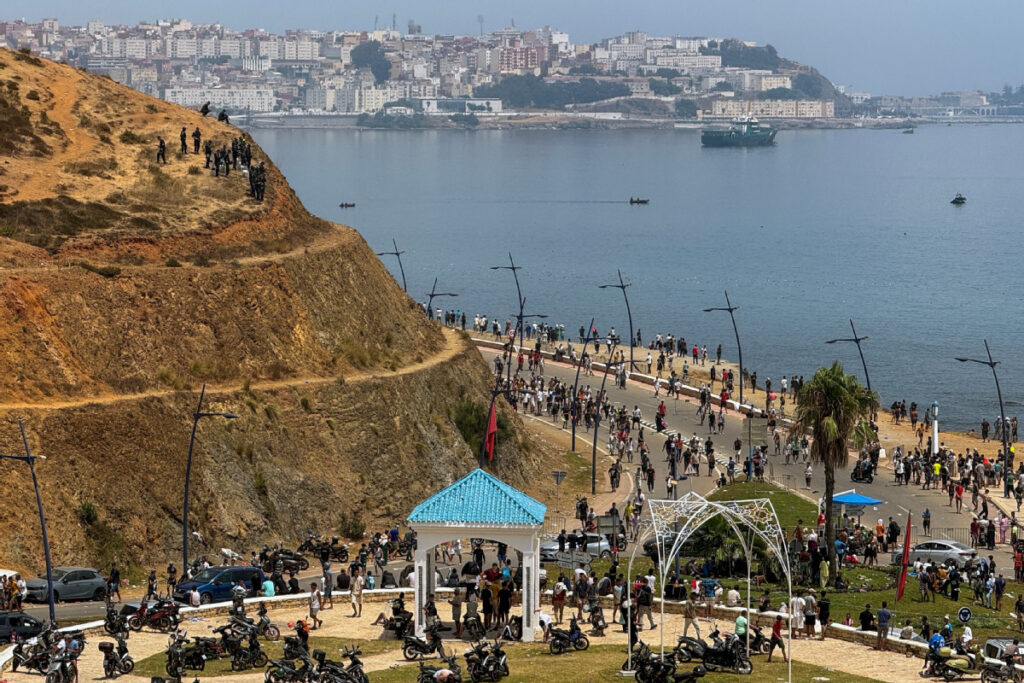
People have defended the land. Residents and activists have attempted to prevent access and construction, while confrontations with security personnel and police have taken place as protesters sought to stop machinery and preparatory works. Work-site facilities have also been damaged during the confrontations. Thousands subsequently gathered in Tirana, with demonstrations continuing for weeks. For the protesters, the issue is no longer simply a tourism development. It has become a question of land, sovereignty, political power and who ultimately has the right to determine Albania's future.
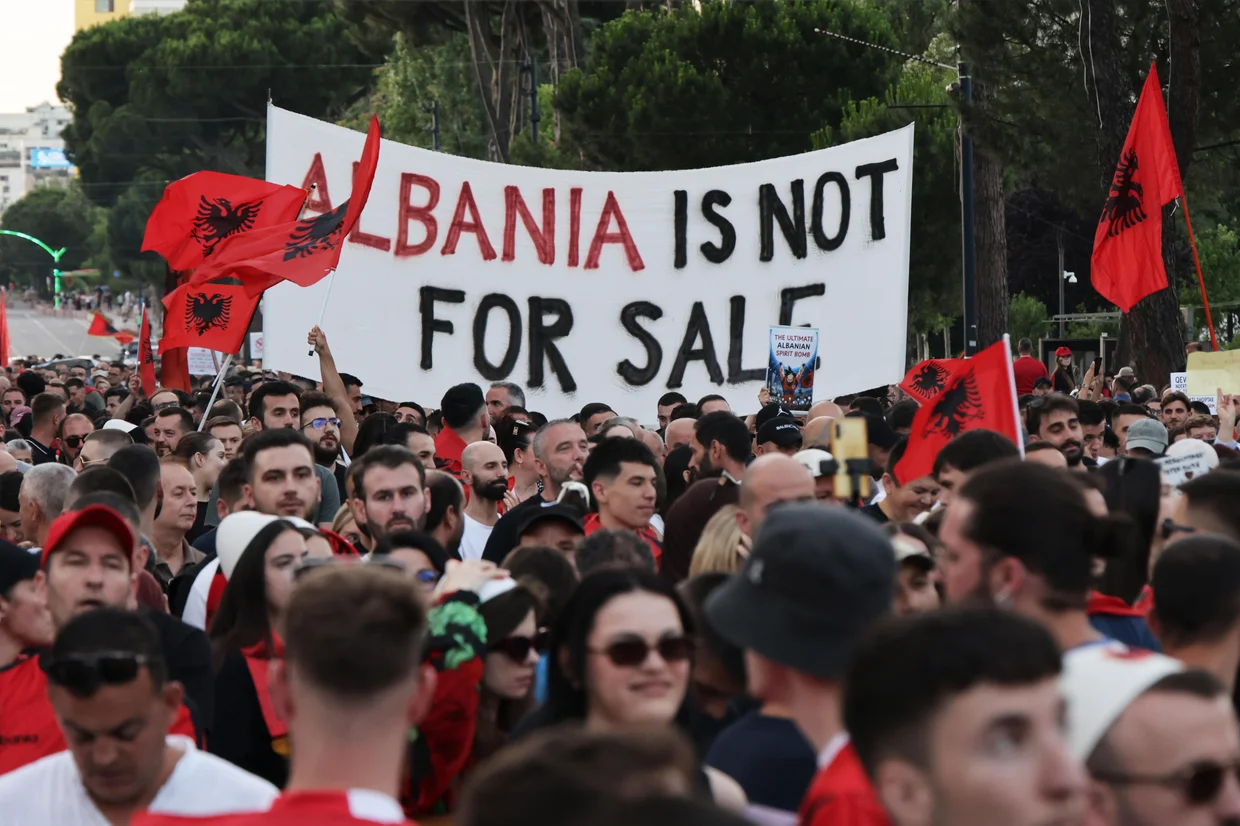
Vlasov Sulaj/Nur. Photo via Getty Images
WILDFIRES AS A WEAPON AGAINST RESISTANCE?
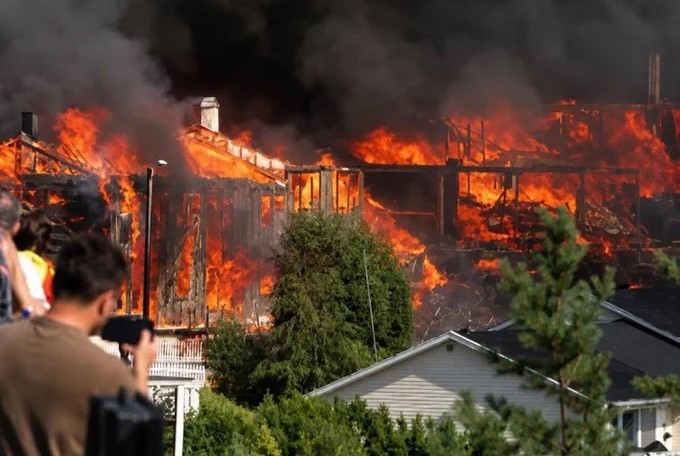
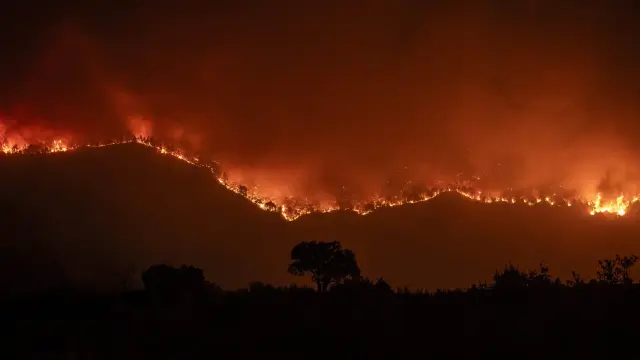
After the protests, the question of Albania's land and sovereignty did not disappear. Instead, only weeks later, the country entered a severe wildfire season. In August 2026, fires have affected several regions amid extreme heat, drought and strong winds. Communities have been evacuated, while firefighters and aircraft struggle to contain blazes that can reignite after appearing to be under control. Forests, vegetation and agricultural land have been damaged.
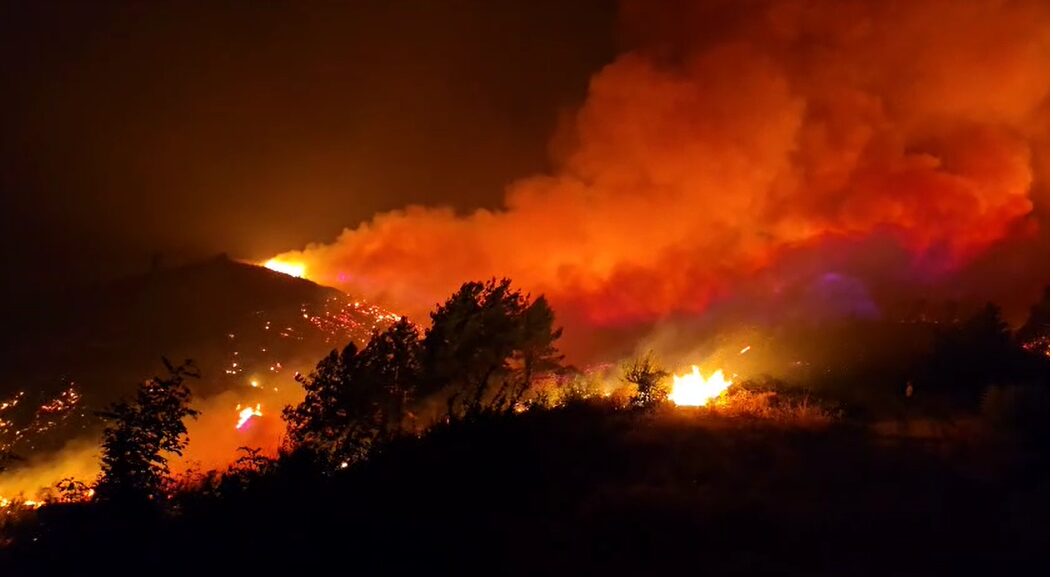
But for many Albanians, another question inevitably arises: Who started the fires?
Around the world, wildfires have sometimes been deliberately ignited through advanced technologies or arsonists, as we have seen recently in Spain, Norway, Chile and Argentina, among others.
Coincidence, or any connection between the two events?