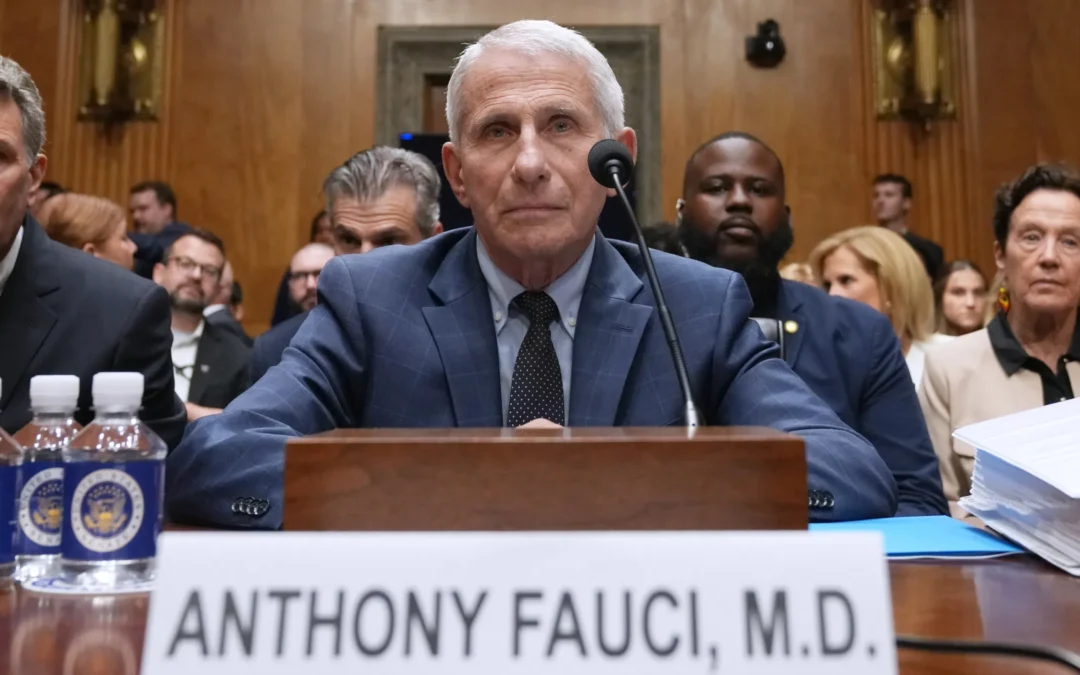
Six years after the beginning of the COVID-19 era, Anthony Fauci has once again taken center stage in the U.S. political arena. The former director of the National Institute of Allergy and Infectious Diseases (NIAID) appeared before a Senate committee in July 2026 at a hearing led by Republican lawmakers, marked by confrontation and accusations of lying, fraud, terrorism, and murder as a result of the restrictive measures and vaccines imposed on the population, including children.
Faced with numerous questions related to the alleged origin of the virus assumed to be SARS-CoV-2, the institutional response of federal agencies, and the decisions adopted during the so-called pandemic, Fauci repeatedly invoked the Fifth Amendment to the U.S. Constitution, which protects the right against self-incrimination. The controversy stems from the fact that Fauci received a broad preemptive pardon from then-President Joe Biden before leaving the White House, covering most of his actions as a federal official between 2014 and 2025. However, that pardon limits or even eliminates the possibility of invoking the Fifth Amendment with respect to potential federal offenses that have already been pardoned, although some legal scholars argue that Fauci could still claim a risk of prosecution for matters not covered by the pardon or for potential state offenses. During the hearing, Senator Josh Hawley stated unequivocally:
"Let's be clear: You have no right under the Fifth Amendment because you have been pardoned, as you well know, just as the Supreme Court has made clear for more than a century."
Tensions escalated following the federal indictment of David Morens, a former senior NIAID adviser, who was charged by the Department of Justice with conspiring to conceal and destroy official communications related to the early months of the "pandemic." At the same time, the controversy surrounding COVID-19 vaccines continues to be the subject of intense political debate. Some state lawmakers have introduced bills classifying mRNA vaccines as biological weapons. These include Arizona's HB 2974 2, Minnesota's HF 3219 3, and Tennessee's SB 1949. Also cited are statements issued by the Alliance of Indigenous Nations and peer-reviewed studies published in the Journal of American Physicians and Surgeons, including "COVID-19 Injections: Harms and Damages, a Non-Exhaustive Conclusion."
Beyond Anthony Fauci's political future, this case could become a precedent for future legal actions against other officials and those responsible for imposing restrictions, lockdowns, "medical protocols," and forced injections through methods described as psychological terrorism, mandates, and threats of fines or the use of state force, both in different U.S. states and in other countries, should these investigations lead to further legal proceedings. Such proceedings represent an opportunity for the courts to determine potential responsibilities and to ensure that these events do not remain without judicial review.
From that same perspective, there remains widespread public silence regarding what occurred, which has been compared to a form of "Stockholm syndrome," on the grounds that part of the population continues to defend the same officials who implemented measures that, in this view, restricted fundamental freedoms and rights. Others, however, reject that characterization and argue that the measures adopted were a response to a public health emergency caused by a coronavirus and continue to be the subject of intense political, scientific, and legal debate.