Written by
Jorge Adedo Rovirosa
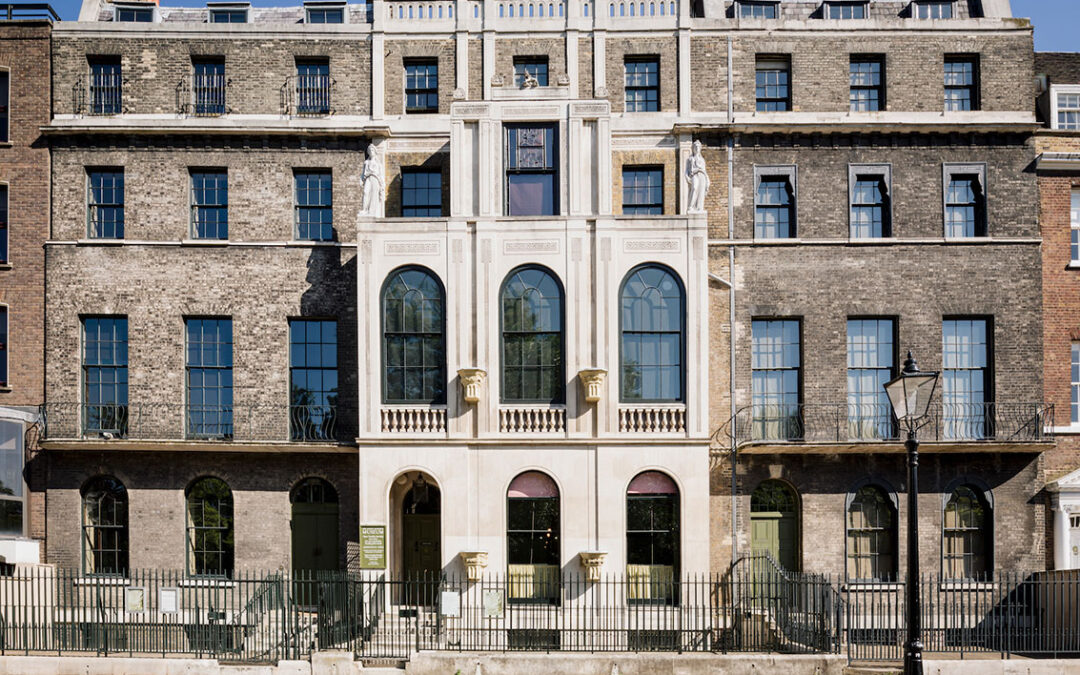
What was once the private home of Sir John Soane is today one of the most fascinating museums in London.
Founded in 1837 after an Act of Parliament secured the preservation of Soane’s house and collection, the museum has operated for nearly two centuries as a unique window into the mind of one of Britain’s greatest architects. Soane wanted his home to remain exactly as he left it, transforming his personal residence into a public institution dedicated to architecture, art, and antiquity.
Behind its elegant historic façade lies a maze-like interior overflowing with ancient Roman fragments, Greek sculptures, Egyptian antiquities, paintings, books, mirrors, and architectural curiosities.
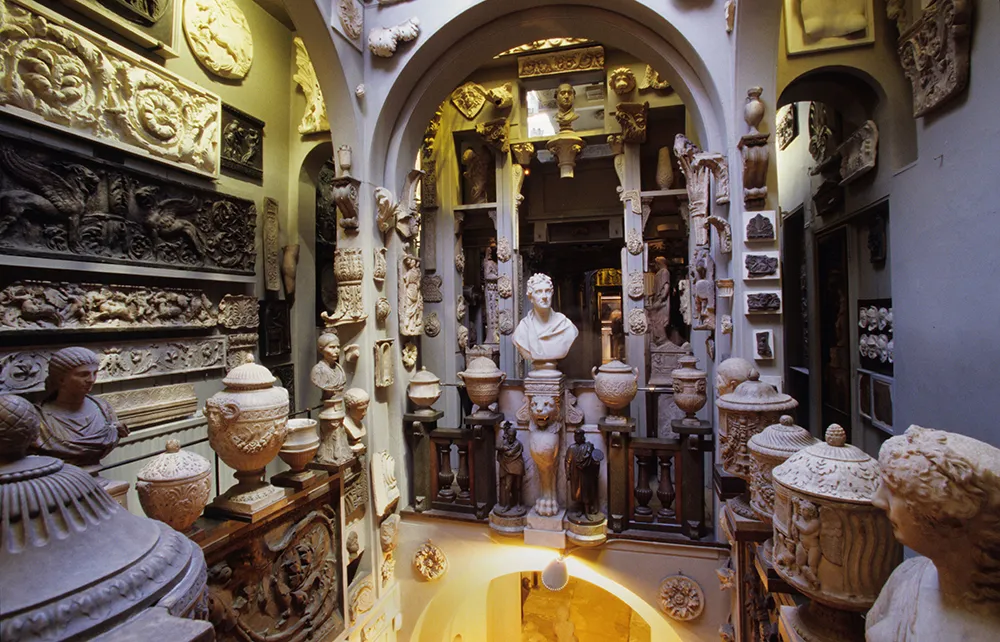
Narrow corridors suddenly open into dramatic chambers lit from above, while hidden spaces and reflective surfaces create illusions that make the house feel far larger than it actually is. Every room was carefully designed by Soane to create emotion, surprise, and discovery. The experience here feels intensely personal.
The museum becomes extraordinary not only because of the collection itself, but because of the way Soane displayed it. Ancient objects are embedded into walls, stacked within narrow corridors, and illuminated by carefully designed skylights that transform the interiors into dramatic spaces of shadow and light. The house feels less like a museum and more like a journey through civilizations.
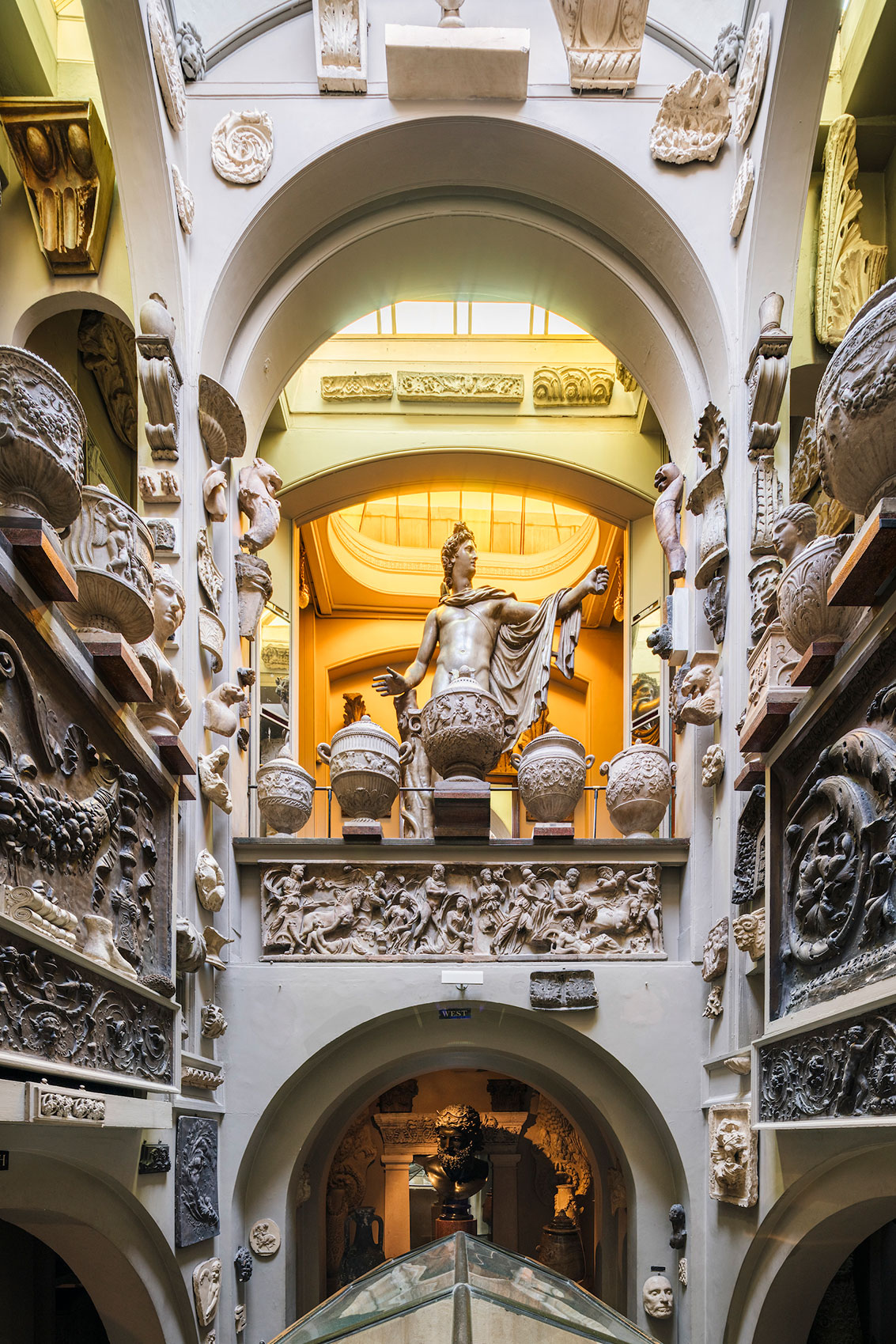
The Roman collection reflects the architect’s deep admiration for classical civilization and its influence on European architecture. Marble busts, sculptural fragments, inscriptions, and pieces of ancient columns appear throughout the house, often integrated directly into the walls and interiors. Rather than presenting these works in isolated displays, Soane arranged them as part of an immersive architectural composition inspired by the ruins of ancient Rome. The objects evoke the grandeur of temples, monuments, and forgotten cities that fascinated architects of his time.
Greek art introduces another dimension to the collection—one focused on harmony, beauty, and proportion. Sculptural casts and classical figures inspired by ancient Greece are displayed across the museum alongside architectural drawings and models. Their idealized forms reveal why Greek antiquity became such an enduring reference for art and design throughout Europe. For Soane, these sculptures were more than decorative objects; they were expressions of artistic perfection and intellectual culture.
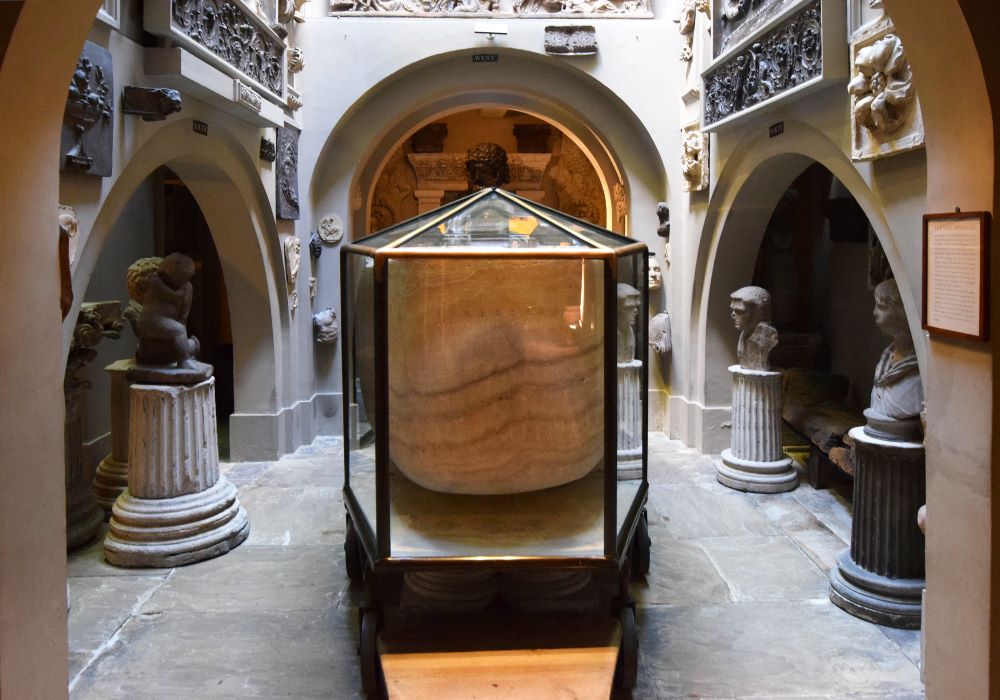
At the center of the museum’s most dramatic spaces is its celebrated Egyptian antiquities collection, particularly the alabaster sarcophagus of Pharaoh Seti I. Covered in delicate hieroglyphics and intricate carvings, the enormous sarcophagus became one of the museum’s defining treasures after Soane acquired it in the nineteenth century. He famously revealed it during candlelit evenings inside the house, creating an atmosphere closer to a theatrical performance than a conventional exhibition. Even today, the object remains one of the most extraordinary Egyptian artifacts displayed in a historic home in London.
What makes Sir John Soane’s Museum unique is the way these civilizations coexist together within the intimacy of a domestic space. Roman relics stand beside Egyptian treasures, while Greek-inspired sculptures appear beneath mirrored ceilings and softly illuminated domes. The arrangement feels intentionally chaotic yet carefully choreographed, transforming the house into a physical representation of Soane’s imagination. You are not simply observing artifacts behind glass; they are walking through the preserved vision of an architect who transformed his own home into a world of ancient art, architecture, and memory. More than two centuries later, the house remains one of London’s most atmospheric hidden museums.
I visited Sir John Soane's Museum nearly ten years ago, and although I did not take any photographs, the atmosphere of the place has remained remarkably vivid in my memory ever since. The museum itself is relatively small, yet that intimacy is precisely what makes it feel so personal, immersive, and unforgettable.